Is an air fryer just a small convection oven?
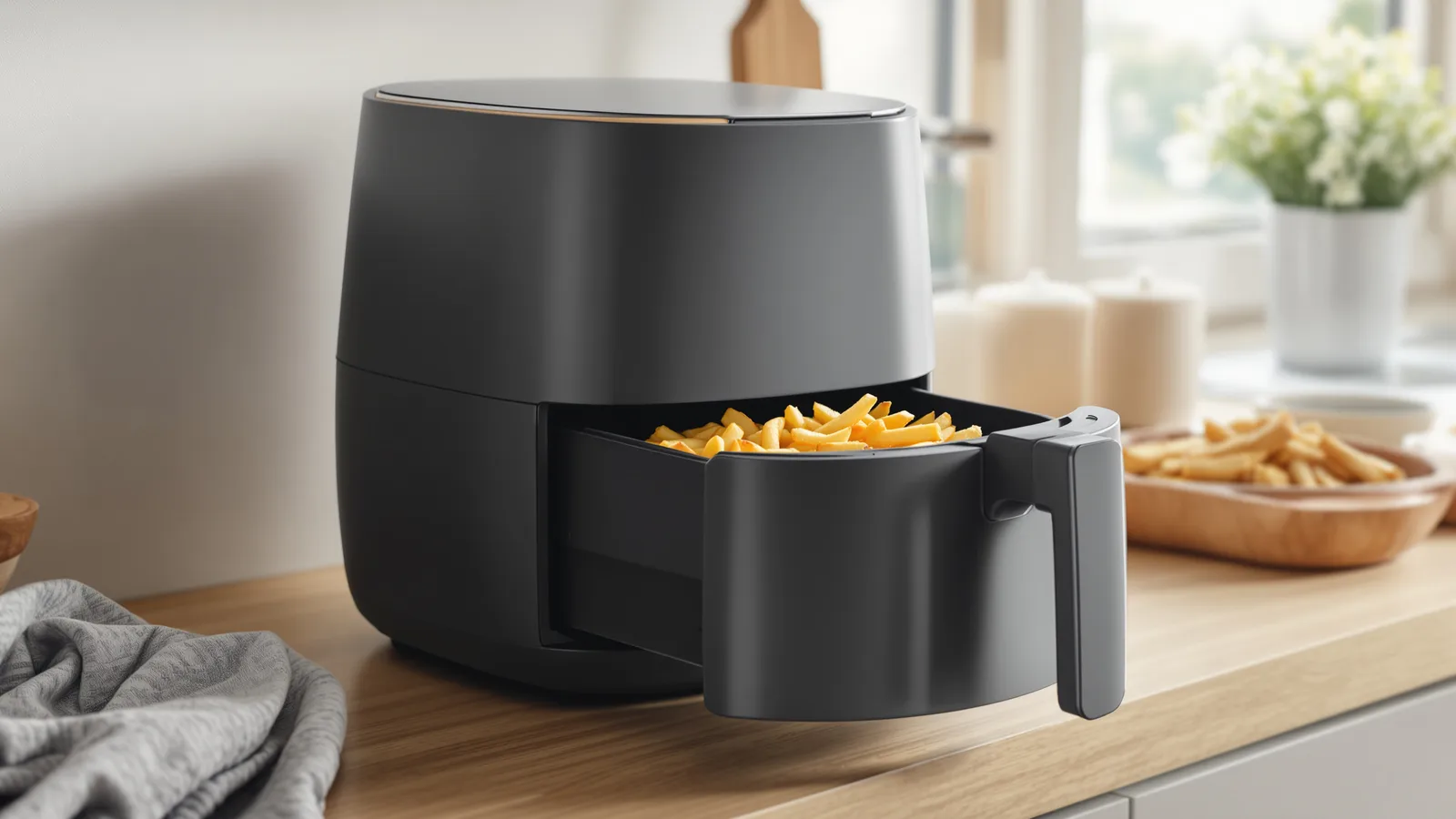
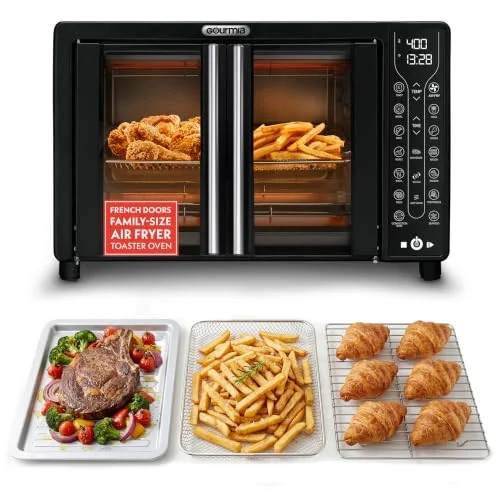
Essentially, yes: a heating element and a strong fan above a small cooking chamber, the same principle as a convection oven in a smaller box. The difference is concentration. In a basket model the fan sits close to the food and the cavity is small, so hot air moves fast across every surface and browning happens quickly. That is why a compact basket usually crisps fries faster than a full-size oven. Nothing is actually fried: a little oil helps browning, but it is optional.
What size air fryer do I need?
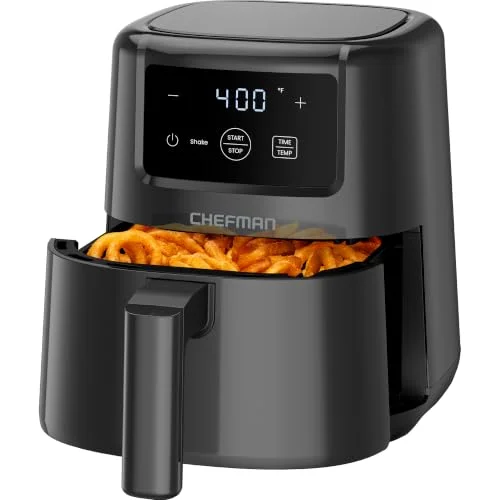
Think in people and floor space rather than quarts. About 2 quarts suits one person. Chefman pitches its own 4-quart basket at two to four people and its 6-quart at three to five, which matches the usual rule of thumb: 4 to 6 quarts for most couples and small families. Bigger households, or anyone who wants a main and a side at once, should look at a single basket of 6.5 quarts or more, or a dual-basket model — remembering that a dual model’s quart figure is shared between two baskets.
Should I get a single-basket or a dual-basket air fryer?
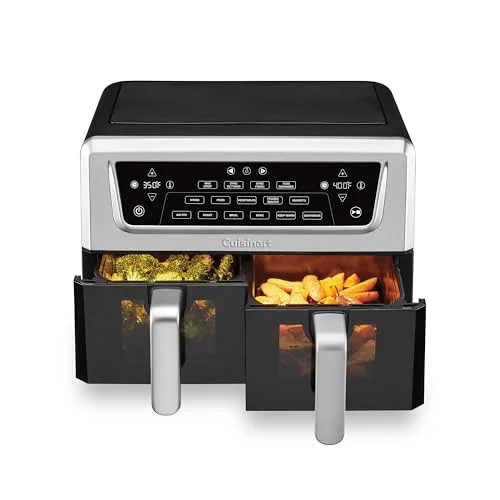
Single, if you mostly cook one thing at a time or want the largest floor for one food, such as wings for a crowd. Dual, if dinner is usually a protein and a side: independent baskets cook each food at its own time and temperature, and sync features time them to finish together. The costs are counter width, since side-by-side baskets make a wide machine, and basket size, each roughly half the headline figure. Stacked designs such as Ninja’s DoubleStack build upward instead; Ninja says its model fits under standard cabinets.
What does PFAS-free mean on an air fryer?
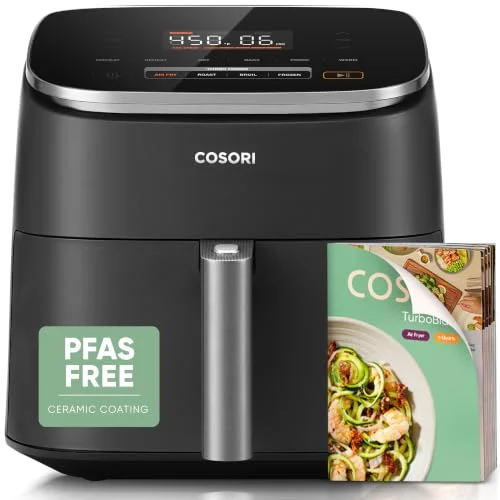
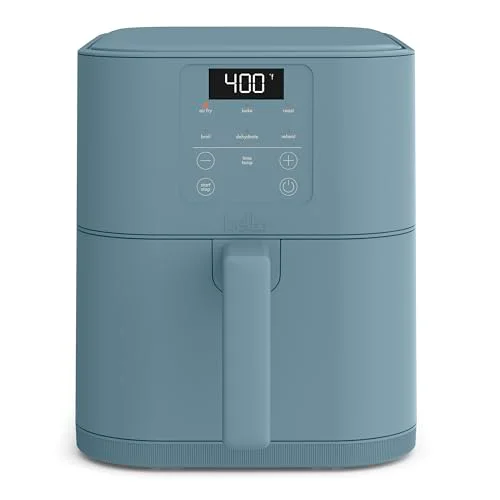
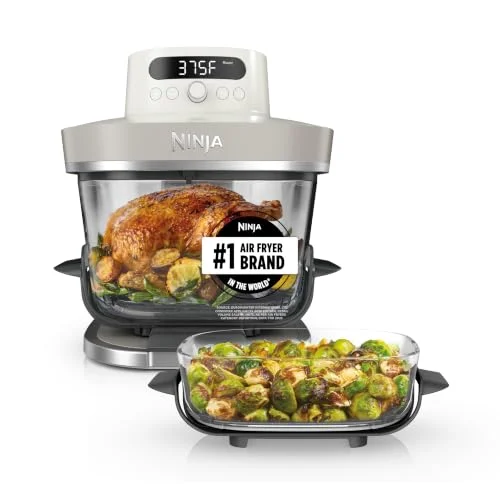
PFAS are a large family of fluorinated chemicals, and PTFE, the material behind most conventional nonstick coatings, is one of them. A PFAS-free air fryer uses something else on the surfaces that touch food: usually a ceramic coating, as on the Cosori TurboBlaze and the bella Fits-Anywhere, or glass, as on Ninja’s Crispi Pro. This is general information, not health advice, and whether it matters is your call. Look for the claim in writing: a listing that only says nonstick tells you nothing about the material underneath.
Can you put foil or parchment paper in an air fryer?
In most models, yes, with two conditions. Never cover the whole crisper plate: the air has to pass through it, so use a small piece or a perforated liner and leave the edges open. And always weigh the liner down with food, because a loose sheet can be lifted by the fan into the heating element, which is a fire risk; never preheat with an empty liner inside. Parchment is the better choice for acidic foods, which can react with aluminum. Your manual has the final word.
Can an air fryer trip a circuit breaker?
It can, if it shares a circuit. The listings we compared that publish a wattage sit between 1,550 and 1,800 watts. A 15-amp, 120-volt circuit supplies about 1,800 watts in total, and even the 20-amp countertop circuits of newer kitchens supply about 2,400. Run an air fryer at the same time as a kettle or a toaster on one circuit and you can exceed either. Plug it straight into a wall outlet rather than an extension cord or power strip, which is standard manufacturer guidance for high-wattage countertop appliances.
How do I know chicken is cooked through in an air fryer?
Use a thermometer, not the color of the skin. USDA guidance puts the safe minimum internal temperature for poultry at 165°F, measured in the thickest part without touching bone. Air fryers brown the outside fast, so a deeply golden piece can still be underdone in the middle, especially a thick breast or a whole bird. Some models build the probe in: Ninja’s DZ550 and DZ950 DualZone listings include an integrated smart thermometer for cooking to a chosen doneness. Otherwise, an instant-read thermometer is the most useful accessory you can add.